

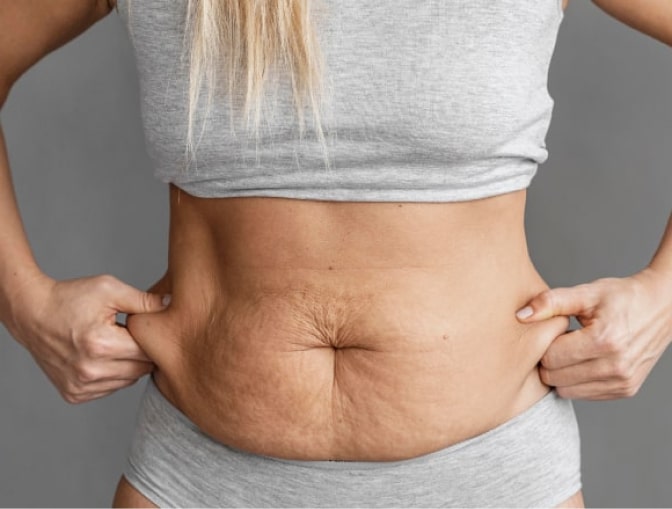
This is normally accompanied by an imbalance of hormones which leads to infertility, weight gain and acne associated with PCOS. A woman with PCOS may also get a “PCOS belly.”
The PCOS belly occurs when her ovaries are enlarged, resulting in a protruding stomach. It may also lead to bloating and rounding of the stomach because of the heightened secretion of male hormone testosterone in the ovaries.
What is PCOS?
PCOS is a hormonal disorder that mostly affects women in their reproductive (childbearing) age (15 to 44). The disorder involves the ovaries of the woman, the organs that generate estrogen and progesterone which are hormones that control the menstrual cycle.
Androgens are some male hormones that are produced by the ovaries. It is manifested by ovulation irregularity, ovary development irregularity, periods irregularity, infertility, surplus face and chin hair, acne, weight gain and hair thinness.
PCOS is a syndrome or a complex of symptoms. Among them are:
- Cysts in the ovaries
- High levels of male hormones
- Early amenorrhea or amenorrhea.
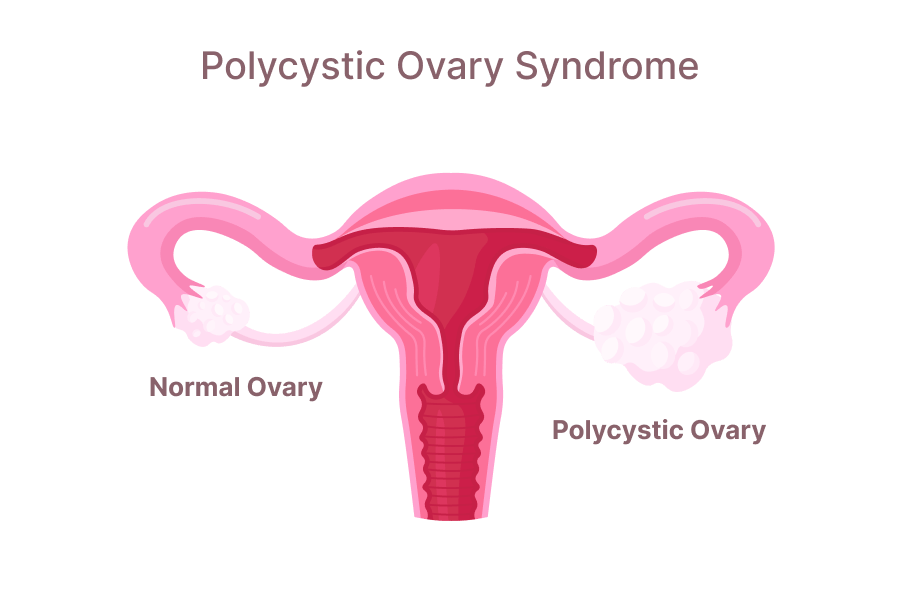
Large ovaries have many tiny and fluid-filled sacs. This is because the prefix polycystic translates to many cysts. High concentration of hormones that are male in nature interferes with the menstrual cycle of a woman; this is how PCOS victims receive fewer regular cycles than normal.
PCOS predisposes women to diabetes type 2 because they are capable of producing insulin, but they are unable to use it, causing them to become insulin resistant.
Who is most likely to suffer from PCOS?
What causes PCOS?
- Insulin Resistance: Insomnia resistance to insulin occurs in approximately 70 percent of PCOS patients. Obesity is a major cause. Obesity and insulin resistance are factors that may put you at risk of type 2 diabetes.
- Inflammation: Women experiencing PCOS tend to possess elevated rates of inflammations in their bodies. Overweight may also be a cause of inflammation.
- Hormone Imbalance: PCOS may be connected with hormonal imbalance among such factors as:
- Genetics: PCOS occasionally is a family disease. In case you have a family member with PCOS like mother, sister, or aunt, then you have a high risk of developing it.
What are PCOS symptoms?
- Unwanted hair growth: Being hairy on the face, chin, breasts, stomach or any other place that men are normally haired.
- Loss of hair: Being hairy on the face, chin, breasts, stomach or any other place that men are normally haired.
- Acne or oily skin: The acne and oily skin on the face, chest, and upper back may be caused by the hormonal imbalance brought about by PCOS.
- Skin darkening: The neck, arms, breasts, the back of the neck and the groin may show thick and dark patches of the skin.
- Always fatigued or not able to sleep: The poor sleep and insomnia are also the most common complaints of PCOS patients. Although you slept, on waking up you are not resting. You could be having a sleeping disorder known as sleep apnea.
- Headaches: Headaches can also be caused by the increase in hormone levels that are linked to PCOS.
- Heavy periods: Besides excessive bleeding and irregular menstruation, PCOS has negative effects on menstruation.
- Irregular periods: In some cases women miss their periods or do not get them.
- Increase in weight: PCOS sufferers are characterized by the weight gain. The symptoms can be aggravated in case they are overweight. The loss of even a few pounds can make your periods timely.
Experiencing problems with pregnancy.: The irregular periods may cause women to have a hard time getting pregnant.
How to identify PCOS
PCOS is capable of resembling other conditions that can resemble it, thus at least two symptoms can lead to its occurrence:
- Irregular menstrual cycle
- Blood tests that indicate elevated levels of androgen (male hormones) or indications such as acne, baldness in a male pattern or additional hair that grows on your face, chin or body.
- Your ovaries have cysts revealed in an ultrasound examination.
Your healthcare provider will do the following steps before making the diagnosis of PCOS:
Physical Exams
Doctors can check your blood pressure, BMI (body mass index) and waistline. They can also examine your skin to see whether it has too much hair, acne and discoloured skin that can occur in case of having PCOS.
- PELVIC EXAMS-A pelvic examination may show the presence of extra male hormones (such as swollen clitoris) and ovarian swelling.
- PELVIC ULTRASOUND- Sound waves are utilized to check your ovaries as far as cysts are concerned, and to check your endometrium (uterine lining).
Tests
-
BLOOD tests – A little of your blood will be taken by your doctor out of the vein in your arm. Diagnostic tests of androgens and other hormones related to typical health issues will also be tested.
Lab tests will determine the concentration of the following hormones:
- FSH-influences pediatric performance in terms of pregnancy.
- Luteinizing hormone (LH)-stimulates ovulation.
- Women with PCOS would have more testosterone-sex hormone.
- Hormones that enable women to obtain their periods and are called Estrogens.
- The human chorionic gonadotropin (hCG) is a hormone examination that is able to ascertain whether a woman is pregnant.
- Anti-Mullerian hormone (AMH)-This examines your ovaries and allows you to know how many years away you are to menopause.
In order to further establish your general health and likelihood of other conditions, doctors conduct other tests including:
- Cholesterol and triglyceride: Lipid profiles. You can be more prone to being heart disease after having PCOS.
- The tests on glucose assist in observing whether you are diabetic. Over fifty percent of women with PCOS develop this disease.
- Insulin: Your doctor will decide to know how your body is reacting to insulin, as this aids in managing the level of sugar in your bloodstream.
Doctors can check your blood pressure, BMI (body mass index) and waistline. They can also examine your skin to see whether it has too much hair, acne and discoloured skin that can occur in case of having PCOS.
- BLOOD tests – A little of your blood will be taken by your doctor out of the vein in your arm. Diagnostic tests of androgens and other hormones related to typical health issues will also be tested.
- Cholesterol and triglyceride: Lipid profiles. You can be more prone to heart disease after having PCOS.
- The tests on glucose assist in observing whether you are diabetic. Over fifty percent of women with PCOS develop this disease.
- Insulin: Your doctor will decide to know how your body is reacting to insulin, as this aids in managing the level of sugar in your bloodstream.
Treatment and Care
Management of PCOS will usually come with certain lifestyle modifications, including diet and exercise. The severity of the symptoms can be minimized with the aid of a healthy diet that enhances insulin resistance and lowers excessive amounts of male hormones. Weight loss can also be caused by daily activity, low intake of sugar and a low-inflammatory diet.
We shall consider the more natural and holistic approach.

Lifestyle and Home Remedies
- Balanced meal- It is important to maintain your blood sugar levels to treat PCOS, and therefore, it is vital to review your diet.
- Reduce sugar intake
- Eat more fiber
- Other interventions include:
- Sleep enough -Sleep is vital to good health. Achieving such level of sleep is not easy due to stress, anxiety and insomnia. According to CDC, the average number of hours of sleep that is required by us as we grow up is 7 to 8.
- Do breathing exercises.
- Make sure that you switch off all your electronics at least an hour before sleep.
- Have a look at investing in good bedding.
- Keep the temperature in the room low.
- Engage in low-impact and strength exercise – Maintain a low level of cortisol and handle stress using low impact exercise such as yoga, Pilates and walking.
The advantages of strength training are that it enhances blood sugar level and assists your cells to respond to insulin. Moreover, it builds lean muscle mass and the more muscles you have the more calories your body is burning even when resting.
Physical Exercise Polycystic Ovary Syndrome 3-5 times/week helps in overcoming the symptom of testosterone like acne, loss of hair and abnormal growing of hair on face. Most PCOS women also have a problem with shedding off weight which exposes them to numerous health complications, such as elevated cholesterol levels, high blood pressures, sleep apnea, stroke, and heart diseases.
- Reduce alcohol intake – To enjoy the antioxidant effects of resveratrol, women should take no more than a single drink daily, and in that case drink red wine since it has low sugar levels coupled with low calorie content.
- Stress reduction -Spending some time a day disconnection to have more of now.
- Setting limits and refusing loved ones and outings.
- The process of relaxation can take various forms which can include activities such as meditation, taking warm baths, reading or even walking.
- Keep a healthy gut -Unbalanced gut bacteria may have a negative impact on your mental health, immune system, and heart. It is imperative that one should be having beneficial gut bacteria when dealing with PCOS as it is known to metabolize estrogen. Optimal gut health can be achieved by taking prebiotics and consuming a lot of fiber. The following products can be useful to you:
- Omni Biotic Stress Release
- Omni Biotic AB-10
- Omni Biotic Balance
Do You Have PCOS?
A PCOS belly can look different for every woman. Some of them can possess a more subtle belly, and others can possess a large and protruding stomach.
In case you suspect that you have PCOS, you need to see a doctor despite the size and shape. Various treatments can help in improving the symptoms and general health.
FAQ’s
What do polycystic ovaries look like?
Polycystic ovaries are large with numerous small fluid filled sacs (cysts) at the periphery. These cysts are immature follicles which had not discharged eggs in the ovulation process.
What does a PCOS belly look like?
A PCOS belly is typically characterized by weight gain around the abdomen. It frequently resembles visceral fat, that is, a fat belly, a firm bloated belly, but not the soft, or general gain of weight.
What causes PCOS belly?
PCOS belly is mainly caused by insulin resistance, hormonal imbalances (like high testosterone), and inflammation, which lead to fat being stored in the abdominal area.
What is polycystic ovaries?
Polycystic ovaries are ovaries whereby there are numerous small and immature follicles or cysts. It is one of the symptoms of PCOS as well as it can develop without the whole syndrome.
What is PCOS in females?
PCOS (Polycystic Ovary Syndrome) is a hormonal disorder in females that affects ovulation, causes irregular periods, excess androgen levels, and often cysts on the ovaries. It can lead to acne, weight gain, infertility, and other health issues.